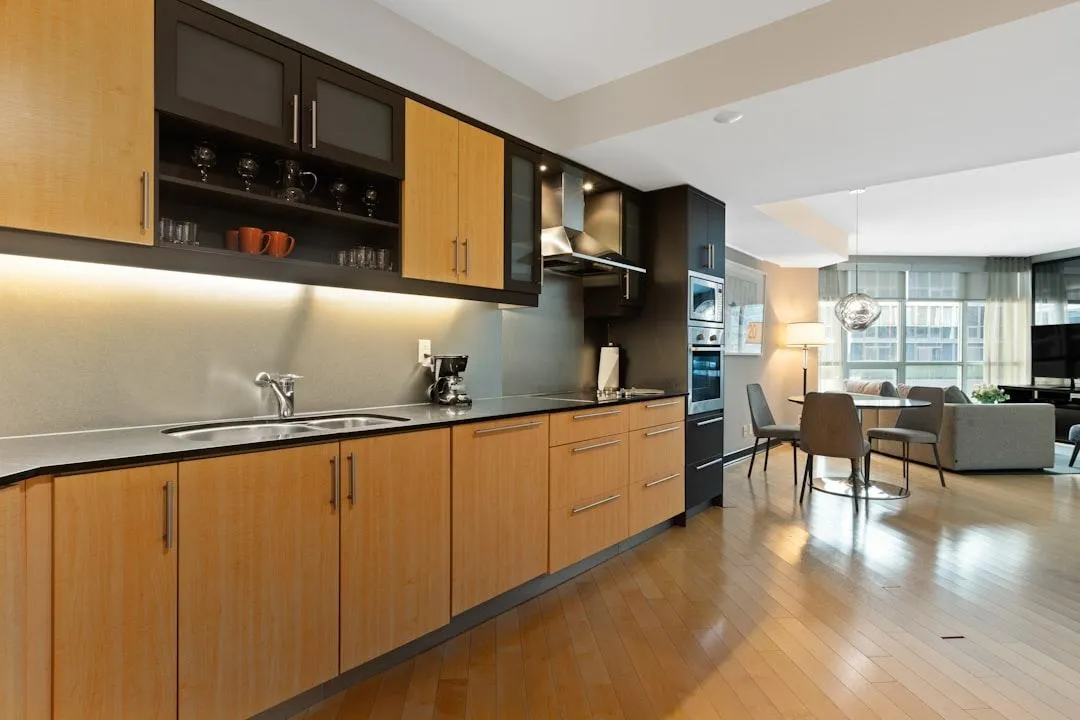
How Professional Cabinet Painting Works: A Guide for Huntsville, AL Homeowners
If you've ever painted a bedroom wall, cabinet painting might initially seem like a similar project on a smaller scale.
In reality, cabinets present a very different painting challenge.
Cabinet doors contain edges, corners, panels, and detailed surfaces. Kitchen cabinetry also experiences frequent handling and exposure to cooking residue, moisture, spills, and everyday wear.
That's why professional cabinet painting involves much more than simply opening a can of paint and applying a new color.
For homeowners considering cabinet painting in Huntsville, AL, understanding the process can help you know what to expect before your project begins.
Step 1: Evaluating the Existing Cabinets
Every successful cabinet painting project should begin with understanding what's already there.
Cabinets can differ considerably in material, age, condition, and existing finish.
Before painting begins, the surfaces should be evaluated to determine their condition and the preparation they may require.
This is also an opportunity to identify obvious damage or other issues that may need attention before a new finish is applied.
If your cabinetry is structurally sound and you're happy with its basic configuration, painting may provide a way to update the appearance without changing the entire layout.
Step 2: Choosing the New Cabinet Color
This is often the most enjoyable part of the process.
The right cabinet color can influence the entire kitchen or bathroom.
Some homeowners want to brighten dark cabinetry. Others want to introduce a richer color that creates contrast against light walls and countertops.
When considering colors, look beyond the cabinet itself.
Consider how your selection works with:
Countertops
Flooring
Backsplash
Wall colors
Appliances
Hardware
Natural lighting
Artificial lighting
A paint color should work with the room as a whole.
Step 3: Preparing the Work Area
Cabinet painting involves many individual surfaces, so organization matters.
Doors, drawer fronts, cabinet boxes, hardware, and surrounding surfaces all need to be handled appropriately during the project.
Protecting areas that aren't being painted is also an important part of the process.
Professional painters approach the project systematically so each component receives the attention it needs while surrounding areas remain protected.
Step 4: Cleaning the Cabinet Surfaces
Kitchen cabinets encounter things walls usually don't.
Cooking oils.
Food residue.
Fingerprints.
Dust.
Cleaning products.
Everyday household grime.
Even cabinets that look relatively clean can have residue on the surface.
Because coatings need an appropriately prepared surface, cleaning is an important early step in cabinet painting.
Applying coatings over contamination can affect how well the new finish performs.
Step 5: Surface Preparation
Preparation is one of the biggest differences between a quick DIY repaint and a professional cabinet painting project.
Depending on the existing cabinets, preparation may involve additional steps to create a surface suitable for the new coating.
This stage can influence how smooth and consistent the finished cabinets appear.
Cabinet painting rewards patience. Rushing directly to the final coat may save time initially, but careful preparation helps establish the foundation for the finished result.
Step 6: Priming When Appropriate
Primer may be used as part of the preparation and coating system depending on the cabinet surface, existing finish, and products selected.
Its role can include helping create a suitable base for subsequent coatings.
Not every surface requires exactly the same approach, which is another reason cabinet painting shouldn't automatically be treated like ordinary wall painting.
Experienced painters can determine the appropriate preparation and coating system for the specific project.
Step 7: Applying the Cabinet Finish
Once preparation is complete, the finish can be applied.
This is where technique becomes particularly visible.
Cabinet doors and drawer fronts tend to receive close visual attention because they're at eye level and surrounded by lighting, countertops, and appliances.
Consistent coverage across doors, drawers, edges, frames, and other visible surfaces helps create a unified appearance.
Straight Line Painting & Drywall offers professional cabinet painting designed to refresh kitchen and bathroom cabinetry with a fresh, durable finish.
Step 8: Allowing the Finish to Dry and Cure
A painted surface may feel dry before the coating has fully developed its intended performance.
That's why newly painted cabinets should be treated carefully according to the coating manufacturer's requirements and the painter's instructions.
Homeowners should avoid assuming that "dry to the touch" means the cabinets are immediately ready for heavy use.
Following the recommended post-project care can help protect the new finish.
Step 9: Reassembly and Final Details
After the appropriate painting stages are complete, doors, drawers, and hardware can be returned to their proper positions as applicable.
This is when the transformation becomes much easier to appreciate.
Cabinet color can significantly influence the room because cabinetry occupies such a large portion of the visual space.
Even though the layout hasn't changed, the kitchen or bathroom can feel noticeably different.
Why Professional Preparation Makes Such a Difference
Homeowners often focus primarily on the final paint color.
Professional painters also focus heavily on everything that happens before the final coat.
Surface preparation can influence:
Appearance
Smoothness
Consistency
Adhesion
Overall finish quality
That is particularly important with cabinetry because the surfaces are viewed closely and handled frequently.
A beautiful cabinet painting project begins well before the final color is applied.
How Should You Prepare for Professional Cabinet Painting?
Your painting contractor can provide instructions based on your particular project, but homeowners can often make the process easier by preparing the surrounding space.
You may need to:
Clear countertops
Remove items near the work area
Discuss access to cabinets
Secure pets away from work areas
Make temporary arrangements for normal kitchen routines
Ask your contractor what they need from you before the scheduled start date.
Clear communication helps everyone know what to expect.
Should You Paint Your Cabinets Yourself?
DIY cabinet painting is possible, but homeowners should understand the amount of work involved before beginning.
Unlike walls, cabinets include many individual components and high-touch surfaces. Preparing, organizing, painting, drying, and reinstalling everything can become a substantial project.
Mistakes can also be highly visible on doors and drawer fronts.
If you want a professional-looking result without handling the entire process yourself, hiring experienced cabinet painters may be the better fit.
Why Choose Straight Line Painting & Drywall?
Straight Line Painting & Drywall provides professional painting services throughout Huntsville and surrounding North Alabama communities. Its services include cabinet painting, interior painting, drywall installation and repair, exterior painting, deck and fence staining or painting, and additional specialty services.
The company emphasizes integrity, workmanship, respect for customers' homes, and completing its painting work in-house.
For homeowners considering a kitchen or bathroom update, cabinet painting can be coordinated with other interior painting needs for a more complete refresh.
Schedule Cabinet Painting in Huntsville, AL
The quality of a cabinet painting project isn't determined by color alone.
Cleaning, preparation, application, and attention to detail all contribute to the final appearance.
If your cabinets are ready for a new look, Straight Line Painting & Drywall provides professional cabinet painting in Huntsville, AL and surrounding communities.
Contact Straight Line Painting & Drywall today to request a free estimate and start planning your cabinet painting project.
